

In the Navy, I was posted away from my family. So instead of spending my evenings in the bar, I worked out-of-hours GP sessions after a full day’s work. It felt like the obvious side hustle for doctors: productive, the evenings were free anyway, and the extra money was real.
Then I did the maths.
I was already well into the additional rate of tax, so close to half of every extra pound disappeared before it reached me. On top of that, there are only so many evenings in a week. Working harder wasn’t the answer, because the problem was never effort. The problem was that an extra shift is exactly the same as your normal shift. You trade an hour, you get paid for an hour, and the trade resets to zero the moment you stop.
That’s not a side hustle. That’s just more medicine.
If you’re a registrar eyeing locum shifts, or a new consultant weighing up extra sessions, you’re standing where I was. And the fix isn’t a better shift pattern. In fact, the best side hustle for doctors is a different kind of asset entirely.
The one test every side hustle for doctors must pass
The one-line test I wish someone had given me sooner: does this keep paying you after you’ve stopped touching it?
A locum shift doesn’t. Neither does a second job, a bank shift, or any arrangement where your income stops the moment you do. Those are all still hours for money — just a different rota.
An asset does. Write something once and it keeps teaching people. Build a small tool once and it keeps running without you in the room. That’s leverage: output that grows without your hours growing alongside it. It’s also what separates a real side hustle for doctors from a second rota. Crucially, you don’t need anyone’s permission to start. No publisher, no investor, no business partner. You need a laptop and an evening.
Until recently, that still had a catch. Building something needed you to learn to code. Writing something worth reading needed hours you didn’t have. AI has taken the gate off both. You don’t need to program. Instead, you can describe what you want and iterate until it works. You don’t need a blank page either, because you can start from a voice note and finish with a published piece.
Where this actually came from
Emergency Medicine Update started because our department’s teaching programme was a once-a-month session most people couldn’t get to — shifts, nights, leave, life. The teaching existed, but almost nobody got it. So I started writing it down instead, once, in a way people could read at their own pace. That’s the whole insight: make it once, and it keeps working whether or not you’re in the room.
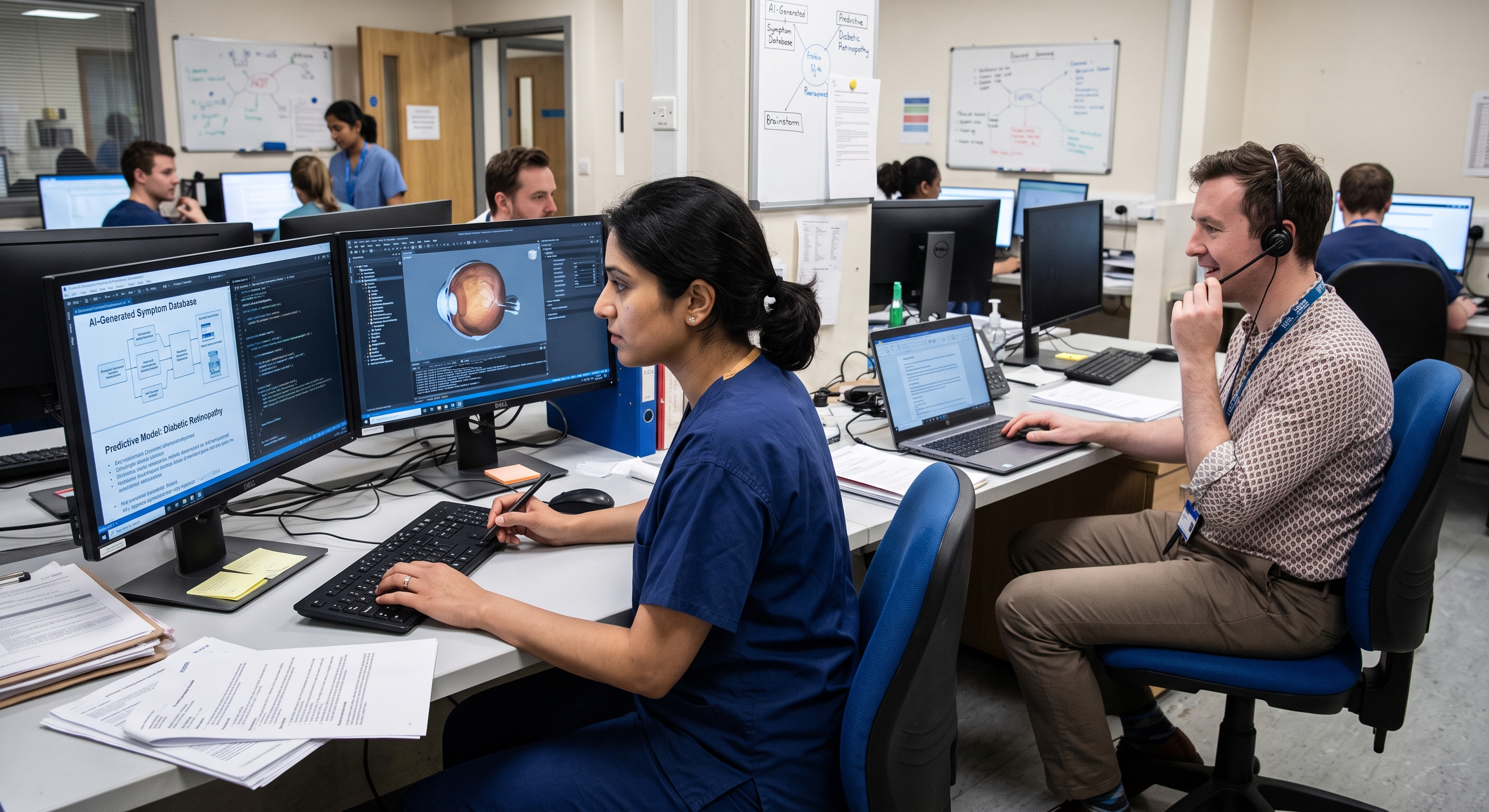
The same thing happened by accident with a Notion folder. I had thousands of AI-generated exam questions in there, built from my own revision notes, for my own revision. Nobody else could use them — they were just sitting there. So I opened Claude Code, described what I wanted, and iterated for about three or four hours. I didn’t write a line of code myself, and it didn’t all work first time. But at the end of it I had an app — EM Update Q Bank — and people now pay for it. It runs whether I’m on shift or not.
Neither side hustle started as a business plan. Both started as something I’d already made for myself, then made once, properly, for other doctors.
How to start a side hustle for doctors this week
1. Find the asset that’s already sitting in a folder.
Notes, templates, a spreadsheet you rebuild every year, revision questions, a process you’ve written down for yourself. You’re not starting from nothing. In fact, you’re almost certainly sitting on the raw material already, so go and look before you try to invent something new. I’ve written more on how to turn your expertise into an asset if you want the longer version.
2. Turn it into one thing — media or a tool, not a plan.
Pick one format and finish it: a written piece, a short guide, or a simple tool. Not a strategy document, not a content calendar. One finished thing you could publish or use this week. For example, my Question Bank started as exactly that — one folder, turned into one tool.
3. Hand the execution to AI, but keep the ends.
I run this on a 5/90/5 split. First, I spend 5% deciding what I actually want to say or build. Then AI does the 90% of drafting or building it. Finally, I spend the last 5% checking it’s right. Because you own the first and last 5%, nothing goes out that you haven’t checked yourself. Write it as an instruction you reuse, not a one-off chat, because ad hoc prompting gets messy fast. If you want to see it in practice, here’s what I handed to AI last week.
4. Publish it once, this week, and stop there.
Don’t wait until it’s perfect. Publish it, then make the next one better.
Know the rules before you start
One caveat before you publish anything: any side hustle for doctors still sits inside your professional obligations. The GMC’s guidance on using social media as a medical professional applies to what you publish. Patient confidentiality applies to every example you use. And NHS conflict-of-interest rules usually mean declaring paid work outside your contract, so check your trust’s policy. None of that stops you. It just means knowing the rules before you start, not after.
You don’t need four side hustles or a business plan. The only side hustle for doctors worth your evenings is one thing, made once, that keeps working after you’ve closed the laptop. That way, medicine can stay the thing you do because you choose to — not the only way you get paid.
Over 1,000 doctors already read along as I build these, one finished thing at a time. Join them at www.building-out.com
This post is for educational purposes only and does not constitute financial advice. Always do your own research and, if needed, ask for advice from a qualified financial adviser regulated by the FCA.




























































Leave a Reply